Book a demo

AI RFP automation for response teams

AI RFP automation for every buyer answer.

Tribble helps proposal teams draft, review, and submit sourced responses for RFPs, DDQs, and security questionnaires while building the deal intelligence layer revenue teams use across every buyer interaction.

Built for high-stakes revenue teams in financial services, healthcare, and enterprise technology.

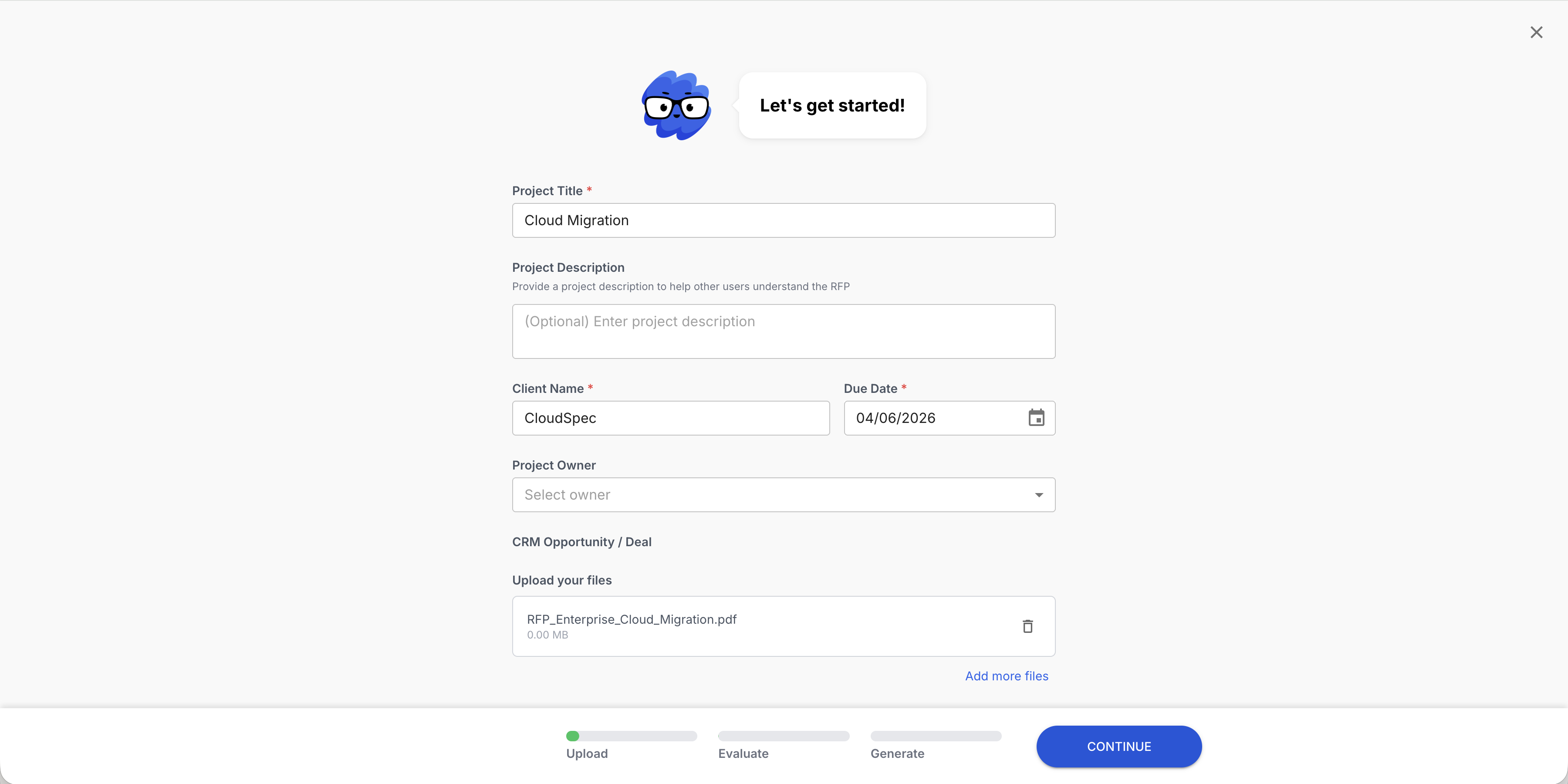
RFP project intake
Tribble project intake screen for uploading an RFP and generating responses

Answer layer

Source-backed responses

Deal context

Calls, CRM, and proposals connected

Security

SOC 2 Type II certified

Model Policy

No training on customer data

The response bottleneck

Tribble is the AI RFP automation system behind fast, governed buyer responses.

Proposal teams use Tribble to turn scattered content, SME knowledge, past submissions, and review history into sourced response drafts with owners, citations, and approval paths attached.

How Tribble works

Three capabilities that turn your approved knowledge into answers buyers can verify.

Each capability earns its place on its own. Together they share context so the response that wins one deal makes every future answer stronger.

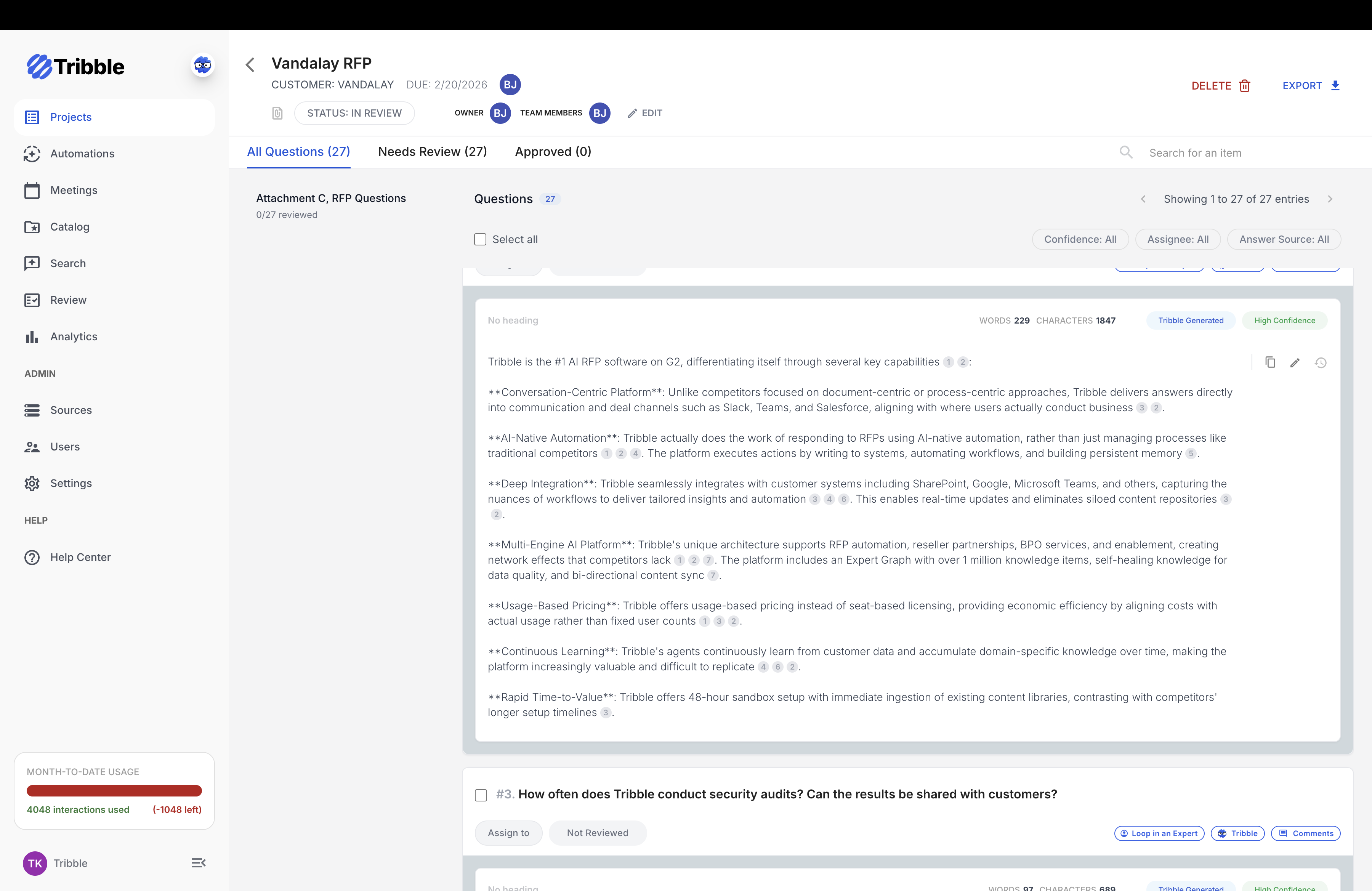
AI Proposal Automation

Respond to RFPs, DDQs, and security questionnaires with sources, confidence scores, and reviewer routing.

Tribble drafts responses from your approved documents, flags low-confidence answers for expert review, and learns from what gets submitted and what wins. Proposal teams stop rewriting the same answers and start governing the knowledge that powers them.

Explore proposal automation
Tribble questionnaire workspace showing RFP questions and project status

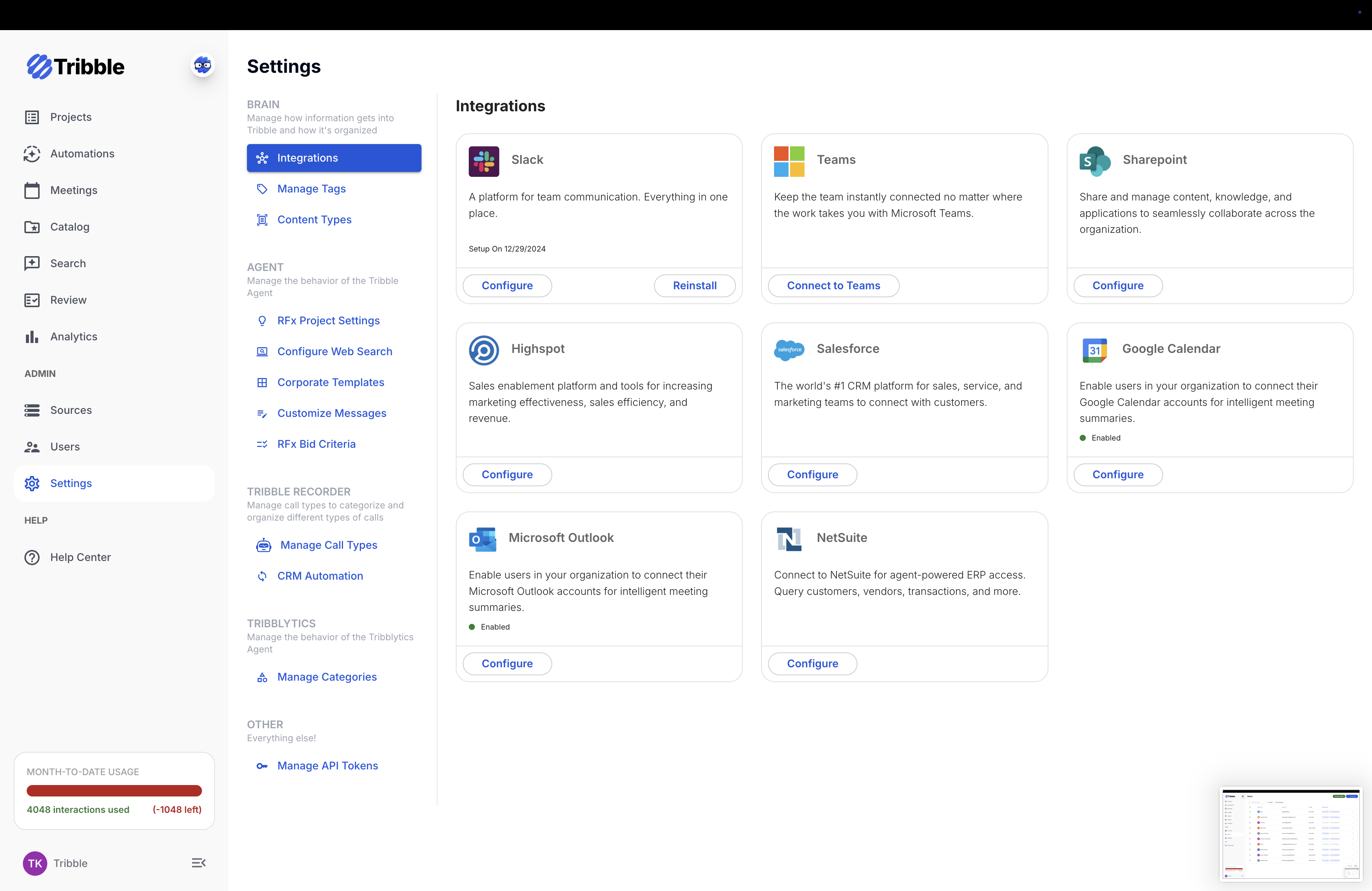
AI Knowledge Base

Give every team instant access to approved company knowledge — with the source behind every answer.

Connect documents, CRM, past proposals, and SME input into one governed knowledge layer. When a proposal manager, sales rep, or security reviewer asks a question, Tribble returns the answer with a citation, a confidence score, and the name of the person who can verify it.

Explore knowledge base
Tribble integrations screen showing connected enterprise source systems

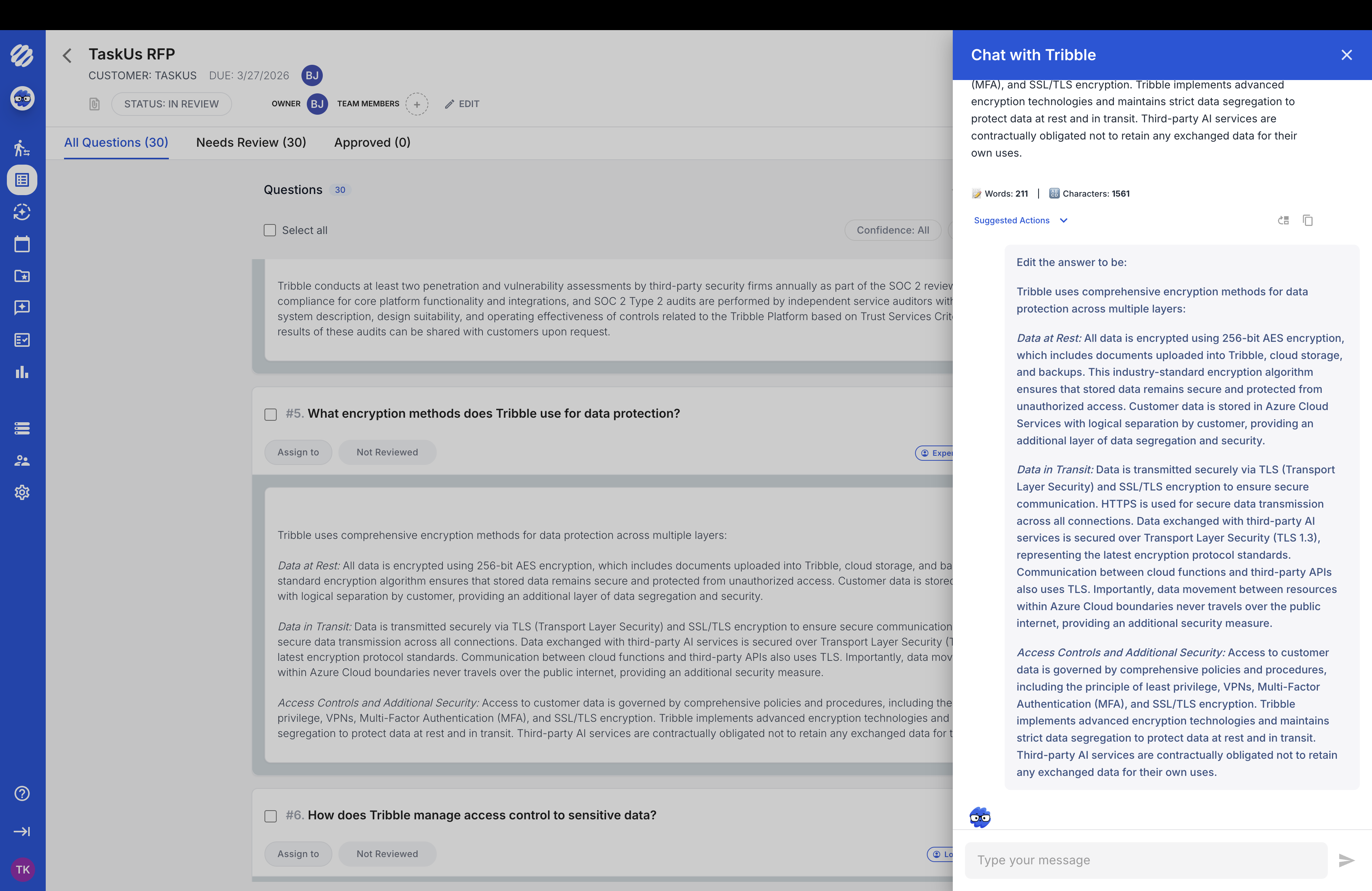
AI Sales Agent

Arm reps with deal prep, coaching, and follow-up answers drawn from the same approved knowledge.

Sales agents pull from governed sources, past responses, and CRM context so reps can answer buyer questions without pulling proposal managers off their next RFP. Every answer feeds back into the knowledge layer the whole team relies on.

Explore sales agent
Tribble chat drawer answering a follow-up question from governed knowledge

How the capabilities connect

Every answer, source, and reviewer decision strengthens the system.

Each RFP response, SME correction, call insight, and submitted answer feeds the same governed knowledge layer. Proposal teams move faster. Revenue teams get smarter. The company learns every time a buyer gets an answer.

Knowledge source

AI Knowledge Base

Approved documents, CRM, past proposals, and SME input become one governed answer layer with sources attached.

Explore knowledge base

Sales context

AI Sales Agents

Deal prep, coaching, and follow-up pull from the same governed sources the proposal team relies on.

Explore sales agents

The knowledge layer

Governed answers power proposals, reviews, sales follow-up, and knowledge delivery from one system.

Every answer cites its source. Every reviewer decision improves the next response. Every deal outcome feeds back in.

View platform overview

Response engine

AI Proposal Automation

Drafts RFP, DDQ, and security questionnaire responses with confidence scores, source citations, and reviewer routing.

Explore proposal automation

Learning loop

Outcome intelligence

Connects what you submitted, who approved it, and whether it helped win the deal — so the next response is stronger.

Explore compound intelligence

What changes when you switch

Legacy RFP tools speed up reuse. Tribble improves the response process.

RFP libraries help teams find old answers. Tribble drafts from approved sources, flags uncertainty, routes SME review, and carries approved answers back into the next RFP, DDQ, or security questionnaire.

Legacy response toolsSearch and paste from static libraries.
TribbleGenerate sourced answers from a living knowledge graph.
Generic AIWrites plausible answers without company evidence.
TribbleShows the source, confidence, and review path.
Disconnected sales toolsKeep calls, proposals, and outcomes in separate systems.
TribbleFeeds answers, calls, and outcomes back into one system.

Switching from a static RFP library? Bring your existing content, connect the systems where answers live, map SME owners, and rebuild the workflow around governed sources instead of static copy.

Every answer shows its source

Designed for teams that cannot afford unverified answers.

Sources

Every answer traces back.

Teams can inspect the source behind an answer before it reaches a buyer.

Permissions

Knowledge respects access.

Connected content inherits enterprise controls and review workflows.

Model policy

No training on your data.

Customer content is protected and not used to train shared models.

Review

Experts stay in control.

Uncertain answers route to the people who own the source of truth.

Start with the bottleneck

Plan your RFP automation rollout. Expand into deal intelligence.

Most teams begin with the response work slowing revenue now, then connect sales conversations, knowledge delivery, and outcomes once the first workflow is working.

  • Migrate your current answer library and connect the source systems your team already relies on.
  • Map SME owners, review paths, and confidence thresholds before the first live response.
  • Choose the first workflow: RFPs, DDQs, security reviews, sales answers, or the shared knowledge base.
  • Add teams and workflows as approved answers start getting reused.
  • Scope enterprise security, compliance, and services requirements with sales.
Plan your RFP automation rollout

Before you evaluate

Before you book a demo.

What is Tribble?

Tribble is AI RFP automation powered by deal intelligence. Proposal, sales, security, and subject-matter expert teams use it to draft, review, and submit buyer responses from approved company knowledge with sources, permissions, confidence signals, and review workflows attached.

What does Deal Intelligence mean?

Deal Intelligence means the answers, conversations, source material, approvals, and outcomes around a deal are connected in one governed system. Tribble uses that context to help teams respond faster while keeping the evidence path visible.

How is Tribble different from an RFP library?

A static RFP library stores old answer text for teams to search and reuse. Tribble drafts new answers from current, approved sources, cites the material behind each answer, and keeps reviewers focused on exceptions instead of copy-and-paste work.

How is Tribble different from a generic LLM or chatbot?

Generic LLMs can draft text, but they do not automatically know which company source is approved, who owns it, which permissions apply, or which expert should review the answer. Tribble is built around governed sources, citations, confidence, routing, and buyer-facing response workflows.

What workflows does Tribble support?

Tribble supports RFP automation, DDQ automation, security questionnaires, sales answer workflows, knowledge-base search, and deal-specific follow-up. Teams can start with proposal automation and expand into sales agents and broader deal intelligence over time.

How does Tribble keep answers trustworthy?

Tribble attaches source citations, confidence signals, permission context, and review ownership to answers. When an answer is uncertain or sensitive, it can be routed to the expert who owns the source of truth before it reaches a buyer.

Who uses Tribble?

Tribble is built for enterprise and regulated go-to-market teams, including proposal managers, revenue leaders, sales engineers, security reviewers, compliance teams, and subject-matter experts in financial services, healthcare, enterprise technology, insurance, and government-facing workflows.

What systems can Tribble connect to?

Tribble can work across the places where company knowledge and deal context live, including document repositories, CRM systems, collaboration tools, call intelligence, and approved knowledge bases. The goal is to make governed answers available inside the workflows where teams already work.

Where do teams start?

Most teams start with the response bottleneck creating revenue friction now, such as RFPs, DDQs, security questionnaires, sales answers, or a scattered knowledge base. AI RFP Automation is often the first entry point, with Deal Intelligence expanding the same governed answer layer across more workflows.
See the platform in action

See how Tribble turns your approved knowledge into sourced, reviewable answers.

A guided walkthrough of the platform with real examples — sources, confidence scores, reviewer routing, and the workflow your team would use in production.

Book a demo